Table of Contents
Introduction
Choosing the right custom sports towels is not simply a matter of adding a logo to an existing towel. For fitness brands, sports clubs, distributors, promotional companies, gyms, and outdoor retailers, the material, towel weight, dimensions, drying performance, branding method, packaging, and expected use all influence whether the finished product performs well in the target market.
A lightweight towel for runners, for example, has very different requirements from a cotton towel used in a commercial gym or a branded team towel sold as merchandise. Buyers therefore need to define the intended application before confirming specifications.
Hello World offers a range of custom sports towels covering cotton, cooling, gym, fitness, and team applications. Understanding how these different specifications affect performance can help brands develop a more suitable product, control unnecessary costs, and reduce changes after sampling begins.
What Should You Consider When Choosing Custom Sports Towels?
The best custom sports towel is the one whose material and construction match the way customers will actually use it.
For most B2B projects, buyers should evaluate at least seven areas before requesting a quotation:
- Material
- GSM and towel weight
- Dimensions
- Absorbency and drying speed
- Logo and decoration method
- Label and packaging requirements
- Expected washing and usage conditions
These variables are connected. Increasing towel weight may improve perceived softness, for example, but can also increase drying time, packed volume, and shipping weight. Likewise, choosing a highly detailed full-surface design may require a different manufacturing method from a simple embroidered club logo.
A good product specification therefore considers the entire product rather than evaluating each feature separately.
Choose the Sports Towel Material Based on Application
Material is one of the first decisions because it affects hand feel, weight, moisture management, drying speed, appearance, and customization possibilities.
Cotton Sports Towels
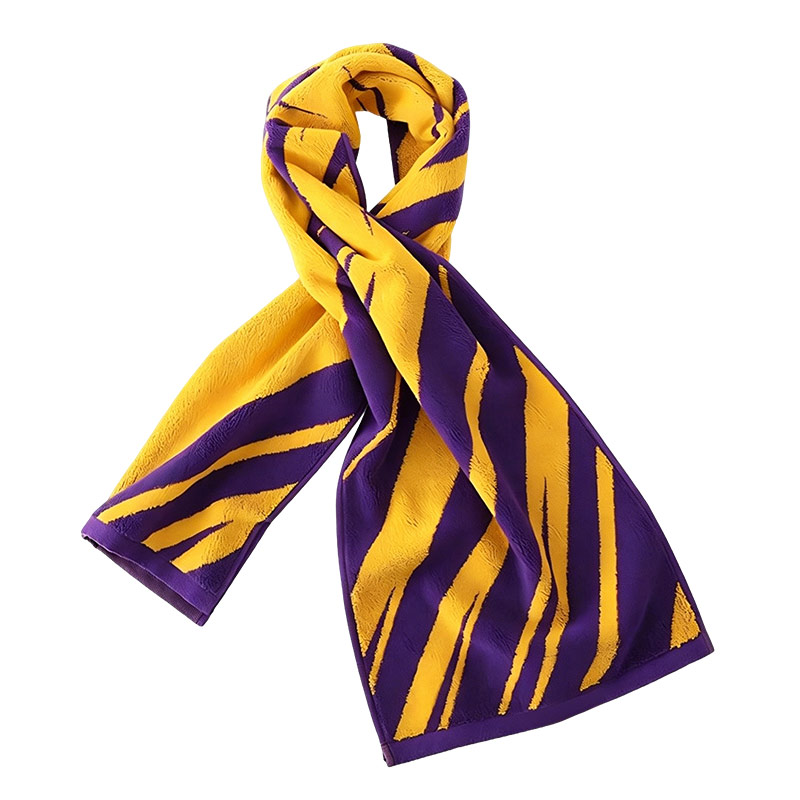
Cotton remains a strong option for gyms, fitness studios, clubs, and buyers who prioritize softness and a familiar towel feel.
A premium cotton sports towel is especially suitable where users expect substantial absorbency and comfort rather than minimum packed weight.
Cotton is often considered for:
- Commercial gyms
- Fitness studios
- Locker rooms
- Sports clubs
- Golf applications
- Promotional programs
- Premium branded merchandise
For buyers selling into markets where tactile quality is important, cotton can also create a more traditional premium impression.
Microfiber Sports Towels
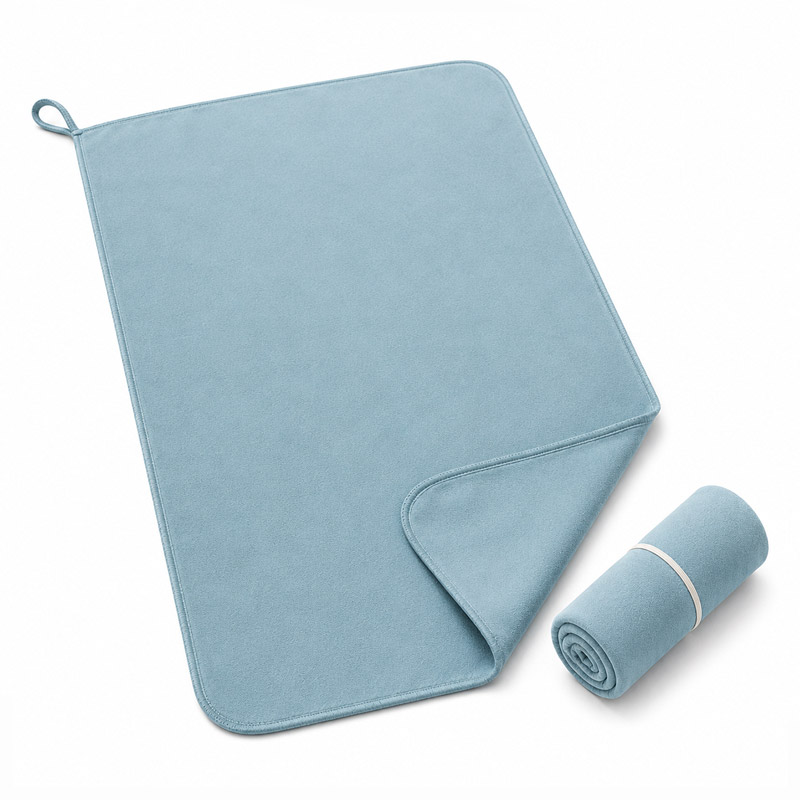
Microfiber is particularly useful when compactness and fast drying are priorities.
According to Wikipedia’s overview of microfiber, microfiber refers to extremely fine synthetic fibers, commonly produced from polyester, polyamide, or combinations of synthetic materials. The fine fiber structure allows manufacturers to engineer fabrics for properties such as softness, durability, and moisture handling.
For sports towel applications, microfiber is particularly relevant to:
- Running
- Cycling
- Hiking
- Travel
- Outdoor training
- Fitness accessories
- Compact promotional products
Because microfiber towels can generally be made lightweight and compact, they are useful for brands whose customers carry towels in backpacks, gym bags, running belts, or travel luggage.
Cooling Fabric
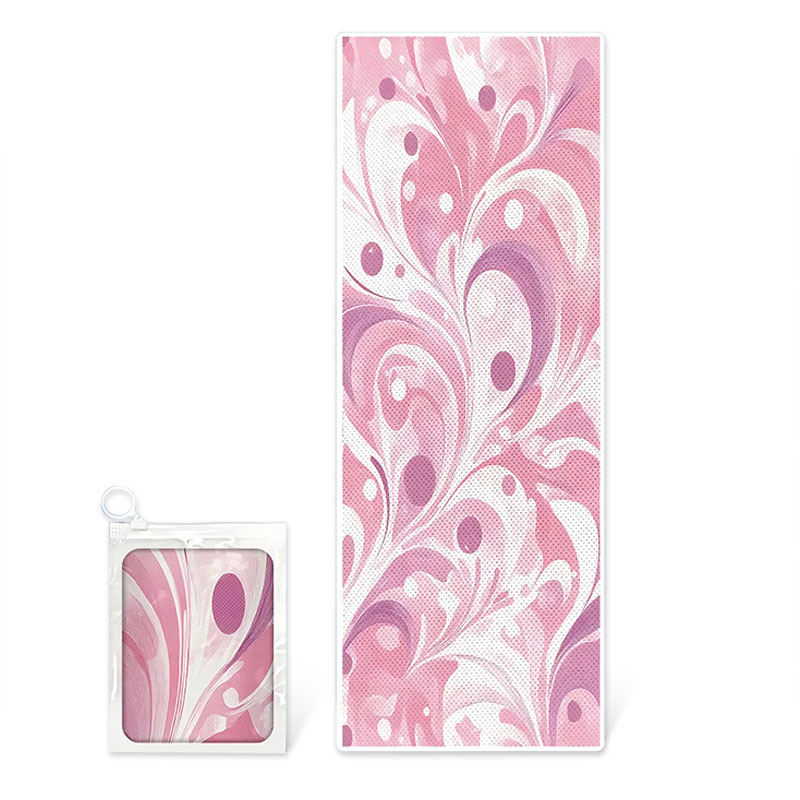
Cooling towels serve a different purpose. Their value is not primarily based on plushness but on lightweight performance and cooling use during exercise or hot-weather activities.
They are commonly selected for:
- Running events
- Outdoor fitness
- Cycling
- Summer sports
- Team training
- Hiking
- Promotional fitness campaigns
Hello World’s sports towel collection includes cotton, cooling, sweat, and team towel options, allowing buyers to choose the fabric platform according to the final use rather than applying one material to every market.
How Much GSM Should a Sports Towel Have?
GSM means grams per square meter and provides a useful way to describe fabric weight. It should not, however, be treated as the only indicator of towel quality.
Different yarns, weave structures, fiber compositions, finishing processes, and towel sizes can produce noticeably different products even when the stated GSM is similar.
As a general purchasing framework:
| Sports Towel Requirement | Typical Direction | Main Consideration |
|---|---|---|
| Running and travel | Lower to medium weight | Compactness and quick drying |
| General gym use | Medium weight | Balance of absorbency and drying |
| Club and fitness towel | Medium weight | Durability and repeated use |
| Premium cotton towel | Medium to higher weight | Softer, fuller hand feel |
| Cooling towel | Lightweight functional fabric | Cooling and portability |
| Promotional towel | Project-specific | Cost, branding area, distribution |
For example, Hello World’s cotton sports towel specifications include options around 200–300 GSM, with custom sizing, Pantone colors, branding, and private-label support available depending on the project.
The important point for buyers is that a higher GSM is not automatically better.
A very heavy towel may feel substantial, but a sports brand selling to runners may prefer a thinner construction that dries faster and occupies less bag space. A gym operator, on the other hand, may accept greater weight in exchange for a more traditional cotton experience.
The target application should determine the GSM rather than the assumption that the heaviest product represents the highest quality.
Select the Right Sports Towel Size
Sports towel dimensions should also be based on use.
A small sweat towel works well for wiping the face, hands, or fitness equipment, while a larger towel may be more appropriate for benches, locker rooms, golf, or general gym use.
Before sampling, buyers should consider:
Where will the towel be carried?
Compact towels are more convenient for runners, cyclists, travelers, and event participants.
How will it be used?
A towel designed mainly for wiping sweat does not need the same surface area as one designed for showers or benches.
How large is the logo?
The towel needs sufficient decoration area for the intended branding without making the logo visually overpowering.
Will the product be packed individually?
Large or heavy towels can significantly affect retail packaging and carton volume.
Custom sizing is particularly valuable for private-label projects because a brand does not have to rely entirely on generic retail dimensions. Hello World’s OEM/ODM towel solutions support specification development covering materials, dimensions, colors, patterns, labels, packaging, and samples before bulk production.
Compare Absorbency, Drying Speed, and Portability
One of the most common mistakes in sports towel sourcing is optimizing only for absorbency.
Sports customers often need a balance between several properties:
| Factor | Cotton | Microfiber | Cooling Fabric |
| Soft traditional feel | Excellent | Good | Functional |
| Compact packing | Moderate | Excellent | Excellent |
| Fast drying | Moderate | High | High |
| Sports portability | Good | Excellent | Excellent |
| Premium gym positioning | Excellent | Good | Specialized |
| Outdoor use | Good | Excellent | Excellent |
| Cooling function | No | No | Yes |
The ideal choice depends on the buyer’s target customer.
A gym chain may prioritize softness, washability, and repeated daily use. An outdoor brand may place more value on low weight and fast drying. A marathon organizer may need a compact towel that can be distributed efficiently to thousands of participants.
This is why product development should begin with an application profile rather than a material name.
Choose the Right Logo and Branding Method
A custom sports towel can carry branding through several methods, and each creates a different appearance.
Common options include:
- Embroidery
- Printing
- Sublimation
- Woven labels
- Care labels
- Custom patterns
- Private-label packaging
Embroidery
Embroidery can provide a recognizable premium appearance and is particularly suitable for logos, club marks, initials, and relatively simple brand graphics.
It works especially well on cotton and traditional towel constructions where buyers want visible texture and long-term brand recognition.
However, extremely large embroidered areas may increase stiffness, weight, and cost, so logo dimensions should be confirmed carefully during sampling.
Printing and Sublimation
Printing is more appropriate when the design requires broader graphic coverage, multiple colors, detailed artwork, or stronger visual impact.
Sublimation is especially useful for compatible polyester-based products and designs requiring vibrant graphic reproduction.
The decoration method should therefore be selected after considering:
- Fabric composition
- Number of colors
- Artwork complexity
- Logo size
- Target price
- Expected order volume
- Intended visual effect
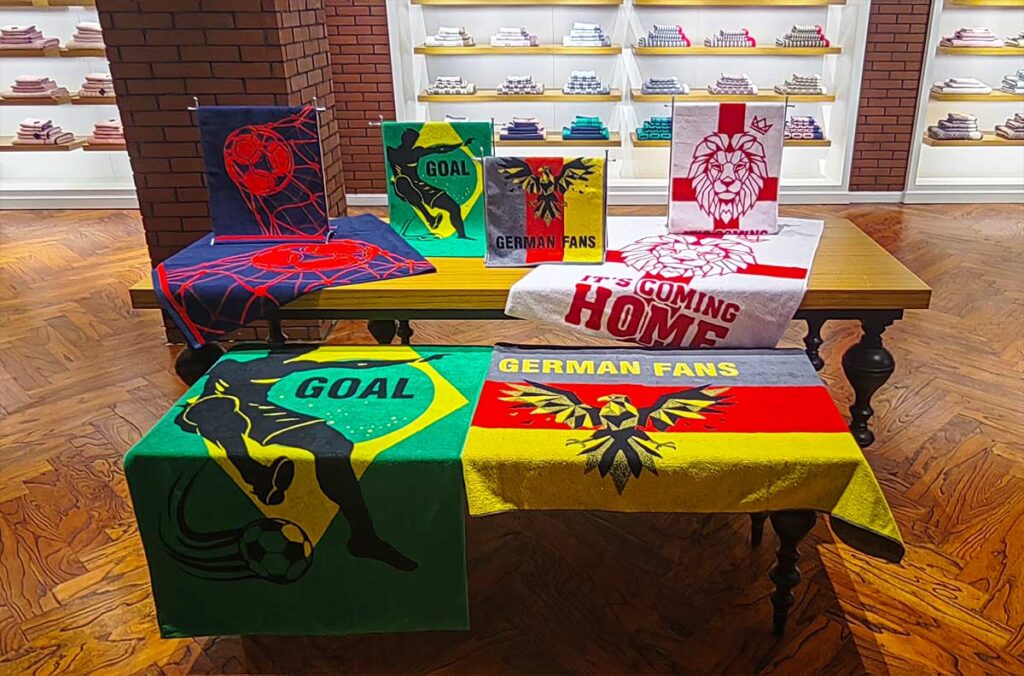
For team-oriented projects, buyers can also explore products such as the custom sports towel range to evaluate different towel formats before selecting the branding technique.
Think Beyond the Towel: Labels and Packaging Matter
For a retail or private-label project, the towel itself is only one part of the finished product.
Packaging influences shelf presentation, e-commerce fulfillment, storage volume, brand perception, and shipping efficiency.
Possible configurations include:
- Individual polybags
- Printed boxes
- Drawstring bags
- Paper sleeves
- Custom inserts
- Woven brand labels
- Care labels
- Barcode labels
- Retail-ready packaging
Brands should decide these details before the final production quotation because packaging can affect unit cost, carton dimensions, packing labor, and delivery planning.
Label requirements also need careful attention when products are sold internationally.
For example, the U.S. Federal Trade Commission provides rules concerning fiber content, responsible company identification, and country-of-origin information for covered textile products. Buyers selling into the United States can review the FTC rules under the Textile Fiber Products Identification Act when preparing labeling specifications.
For international brands, confirming destination-market labeling requirements before bulk production can prevent unnecessary label replacement or repacking later.
Consider Textile Safety and Certification Requirements
Sports towels frequently come into direct contact with skin, so buyers may also need to consider chemical and textile safety requirements based on their target market, retailer, or brand policy.
One widely recognized textile certification framework is OEKO-TEX STANDARD 100, which evaluates textile products and their components against requirements related to potentially harmful substances.
Certification should not be treated as a generic marketing claim. Buyers should confirm exactly which material, component, supplier, or finished product is covered by a certificate and whether the certification scope matches their purchasing requirement.
For private-label development, it is useful to discuss compliance expectations early, especially when products will be sold through large retailers, distributors, corporate programs, or regulated markets.
Evaluate Samples Before Bulk Production
Sampling is one of the most important stages in custom sports towel development.
A sample allows the buyer to evaluate whether specifications that look good on a quotation sheet also work as a finished product.
During sample review, check more than the logo.
A useful evaluation should include:
| Sample Check | What to Review |
| Material | Hand feel, fiber composition, texture |
| Size | Finished dimensions and tolerance |
| Weight | Whether the product feels appropriate for its application |
| Color | Match against approved color reference |
| Logo | Position, size, sharpness, appearance |
| Stitching | Edge consistency and workmanship |
| Absorbency | Performance during realistic use |
| Drying | Suitability for intended application |
| Label | Content, placement, readability |
| Packaging | Fit, presentation, protection |
For branded products, buyers should ideally approve a complete specification rather than relying only on photographs.
Hello World’s custom towel development process covers material and sample confirmation, customization approval, bulk production, quality inspection, packaging, and international delivery. This helps create a clearer reference point before production starts.
Match the Towel to the Buyer and Sales Channel
There is no universal “best sports towel.” The best choice changes by market.
Fitness and Gym Brands
Gym and fitness buyers often need a balance between absorbency, durability, drying performance, and repeated washing.
Cotton works well for traditional gym towel programs, while microfiber can be a strong option for portable workout towels and fitness accessories.
Running and Outdoor Brands
Weight and packed volume matter more in this segment.
Microfiber or cooling fabrics are often more practical because users may carry the towel throughout a run, hike, cycling session, or outdoor event.
Sports Clubs and Teams
Brand identity usually becomes more important.
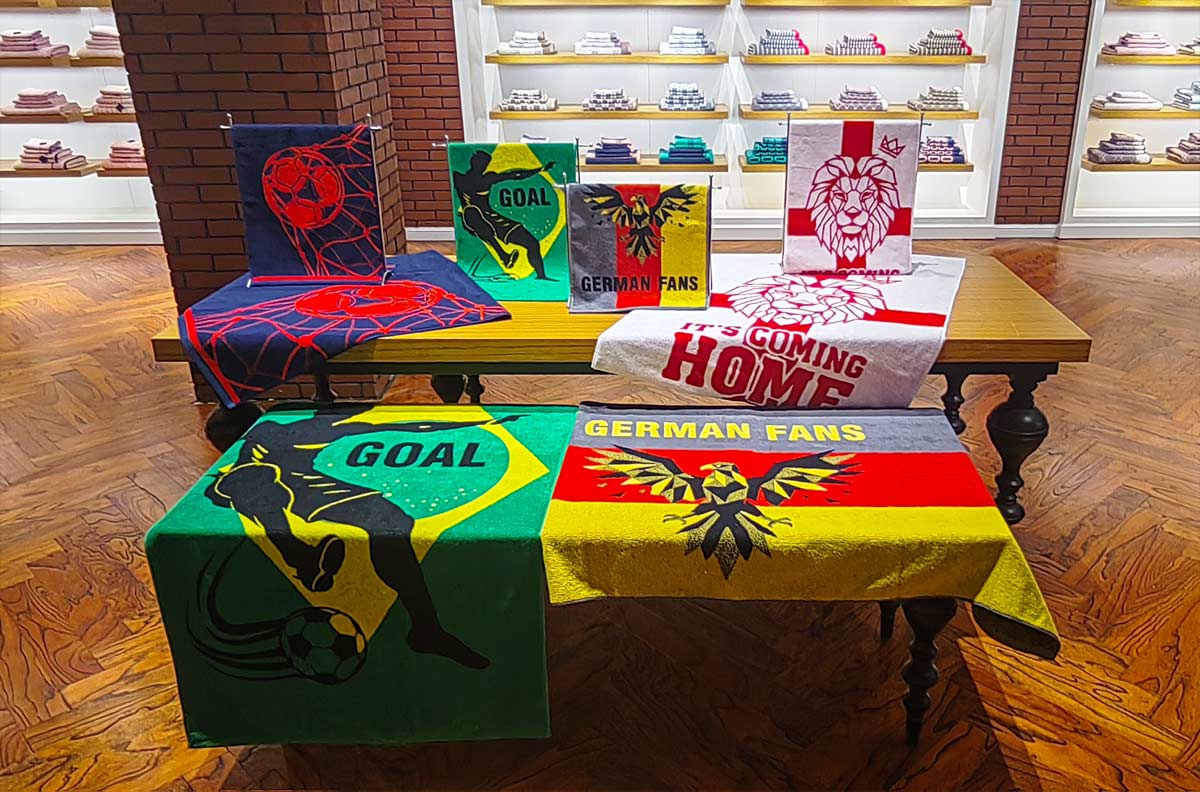
Logo visibility, club colors, embroidery, printing, and custom sizing can help transform a towel from a basic textile into team equipment or merchandise.
Promotional Buyers
Promotional projects often prioritize logo exposure, distribution efficiency, target unit cost, and packaging.
The specification should therefore be optimized for the campaign rather than copied directly from a premium retail towel.
Private-Label Retail Brands
Retail buyers need to think about the complete commercial product.
This includes:
- Material positioning
- Brand differentiation
- Packaging
- Labels
- Color consistency
- Product photography
- Reorder consistency
- Shipping dimensions
Working with a manufacturer that supports these different stages can be more efficient than treating manufacturing, branding, packaging, and inspection as completely separate decisions.
You can learn more about Hello World’s manufacturing and customization capabilities on the About Us page.
What Should B2B Buyers Ask a Sports Towel Manufacturer?
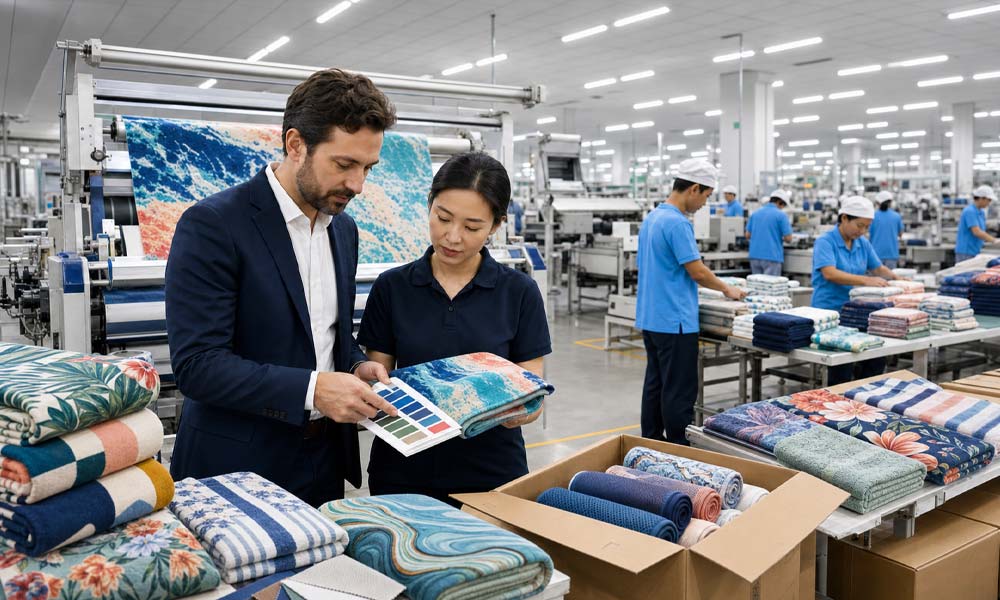
Before placing a bulk order, buyers should ask questions that reveal how well the supplier can manage customization and repeat production.
Important questions include:
Which materials are available for my application?
Do not ask only for a catalog. Explain where the towel will be used and ask the supplier to recommend suitable structures.
Can I customize GSM, dimensions, colors, and logo?
Confirm which specifications are genuinely customizable rather than assuming every feature can be changed at the same MOQ.
What determines the minimum order quantity?
MOQ can vary according to material, size, color, logo method, and packaging.
Can I approve a sample before bulk production?
A custom sample provides a physical reference for later quality control.
How is color consistency managed?
This is especially important for brand colors and repeat orders.
What quality inspections are performed?
Size, weight, stitching, color, printing, embroidery, absorbency, and packaging should be considered according to the project.
Can the supplier support private labels and retail packaging?
This can simplify the development process for brands launching a complete product rather than purchasing an unbranded towel.
Frequently Asked Questions About Custom Sports Towels
What is the best material for a custom sports towel?
There is no single best material. Cotton is suitable when softness and a traditional towel feel are priorities, microfiber is useful for lightweight and quick-drying applications, and cooling fabric is designed for hot-weather and active sports use. The correct choice depends on how the towel will be used.
Are microfiber towels good for sports?
Yes. Microfiber is particularly suitable for running, cycling, fitness, travel, hiking, and outdoor activities because it can be engineered into lightweight, compact, quick-drying towel constructions.
What GSM should I choose for sports towels?
The appropriate GSM depends on material and application. Lightweight towels are generally more suitable for portable sports use, while medium or heavier cotton towels may be preferred for gyms, clubs, or premium programs. GSM should be evaluated together with fiber type, size, construction, and required drying speed.
Can sports towels be customized with a logo?
Yes. Depending on the towel construction, common branding options include embroidery, printing, sublimation, woven labels, and custom patterns. The best method depends on the material and artwork.
Can I customize sports towel packaging?
Yes. Private-label sports towel projects can include custom bags, sleeves, boxes, labels, inserts, and other retail-ready packaging depending on order requirements.
What information should I send when requesting a quotation?
Provide as much information as possible, including material, towel size, approximate GSM or weight, quantity, Pantone color, logo artwork, branding method, packaging, destination country, and required delivery schedule.
Should I request a sample before placing a bulk order?
For a custom product, sample approval is highly recommended. It allows the buyer and manufacturer to confirm material, dimensions, color, logo, workmanship, and packaging before bulk production.
Conclusion
Choosing custom sports towels successfully requires more than comparing unit prices. Material, GSM, towel size, absorbency, drying performance, logo method, labels, packaging, compliance requirements, and final application all influence how well the product fits its market.
A gym towel, running towel, team towel, cooling towel, and retail fitness accessory should not automatically share the same specification. Brands achieve better results when they define the user and sales channel first, then build the towel around those requirements.
Hello World (Shandong) Textile Technology Co., Ltd. provides integrated OEM/ODM support for sports towels, cooling towels, microfiber towels, cotton towels, and custom beach towel programs. Buyers can explore the complete sports towel collection or review the company’s OEM/ODM customization solutions to begin defining materials, dimensions, colors, branding, labels, packaging, and sampling for a new project.
Need custom sports towels for your brand, gym, team, or retail program? Explore our sports towel products and send your target material, size, quantity, logo, and packaging requirements to start developing a specification for your project.