Table of Contents
Introduction
A sports towel may look like a simple training accessory, but material, size, fabric weight, drying performance and construction can significantly affect how well it works in different activities. A compact towel designed for a gym session has different requirements from a towel used for football training, running, cycling, outdoor events or branded fitness merchandise.
For brands, sports teams, distributors and retailers, these differences become even more important when developing a custom towel collection. Choosing the right specification requires more than selecting a color and adding a logo. Material performance, dimensions, GSM, branding method and intended use should work together as one product concept.
This guide explains the main factors involved in selecting a sports towel, including cotton, microfiber and cooling fabrics, common size considerations, GSM, application differences and customization options. It can also help businesses define clearer specifications before beginning a custom or bulk towel project.
What Is a Sports Towel?
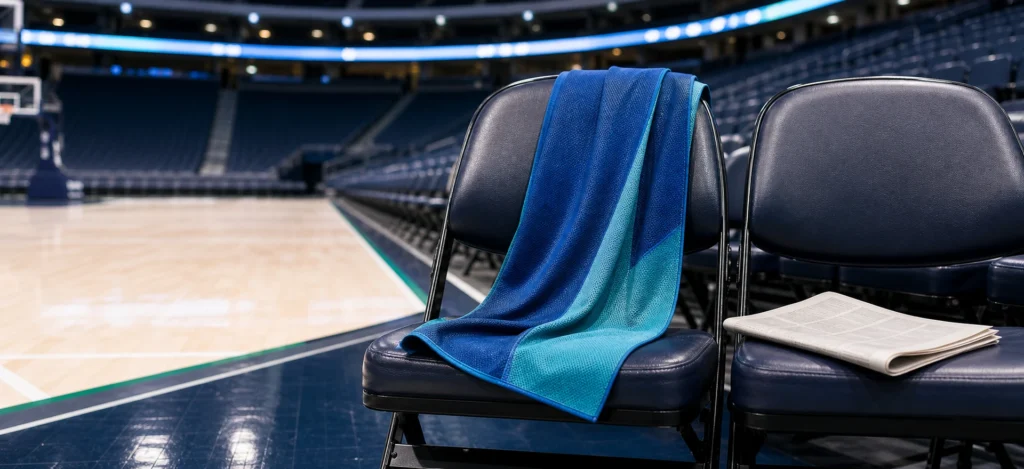
A sports towel is an absorbent textile product intended to manage sweat and moisture during or after physical activity. Unlike large bath towels, sports towels are generally designed around portability, frequent handling and specific activity requirements.
The broader towel category includes many constructions and fiber types. A towel works primarily by drawing moisture through direct contact, while its actual performance depends on fiber composition, fabric structure, surface construction and weight.
Sports towels can therefore take several forms. A soft cotton towel may suit gyms, yoga studios, teams and general fitness applications, while lightweight microfiber can be useful where compact storage and faster drying are priorities. Specialized cooling fabrics are intended for hot-weather training and outdoor activities.
Hello World’s current sports towel collection includes products developed for gyms, fitness brands, teams and sporting applications, providing a useful example of how one category can contain several different towel constructions.
Why Material Matters in a Sports Towel
Material is one of the first decisions to make because it influences hand feel, moisture management, drying behavior, weight and branding possibilities.
There is no single material that is automatically the best sports towel material for every application. The appropriate choice depends on where the towel will be used and which characteristics have priority.
| Material | Main Characteristics | Suitable Applications | Selection Considerations |
|---|---|---|---|
| Cotton | Soft, familiar textile feel and dependable absorbency | Gyms, yoga, fitness centers, teams and branded programs | Suitable when comfort and traditional towel feel are priorities |
| Microfiber | Lightweight, compact and generally quick drying | Running, travel, fitness and outdoor sports | Useful when portability and drying speed are important |
| Cooling Fabric | Lightweight and designed for wet-activated cooling use | Running, cycling, training and hot outdoor activities | Appropriate for products positioned around cooling functionality |
Cotton Sports Towels
Cotton is a natural fiber widely used in textiles because it can produce soft, breathable and durable fabrics. In sports towel applications, cotton is often selected when comfortable skin contact and reliable moisture absorption are important.
A cotton sports towel works particularly well for general fitness, gyms, yoga, sports clubs and branded merchandise where users expect the familiar feel of a conventional towel.
For example, Hello World’s Cotton Sports Towel is made from 100% cotton and can be configured with different dimensions, colors and branding methods. This type of product illustrates why cotton remains relevant even as more technical towel fabrics enter the sports market.
Construction also matters. Terrycloth, for example, uses projecting loops that increase the surface available for absorbing moisture. Buyers should therefore evaluate not only the word “cotton” on a specification sheet but also the structure, weight and intended performance of the finished towel.
Microfiber Sports Towels
Microfiber is particularly attractive when lightweight handling and compact storage are important. The term microfiber refers to very fine synthetic fibers, commonly produced from materials such as polyester and polyamide.
The fine fiber structure allows microfiber textiles to be engineered for different characteristics, including softness and moisture management. In practical sports applications, microfiber towels are frequently associated with travel, running, fitness and outdoor use because they can be compact and dry relatively quickly.
This does not mean that every microfiber towel performs identically. Fiber blend, surface structure, fabric weight and finishing still influence the final product. A microfiber sports towel intended for running may therefore need a different specification from one designed for a gym promotion or retail sports collection.
Cooling Towels
Cooling towels occupy a more specialized position within the sports towel category. Rather than focusing only on absorbing sweat, they are designed to provide a refreshing effect after being wet and activated according to their intended use.
That makes them relevant to running, cycling, gym training and outdoor activities in warm environments. Hello World’s Cooling Towel is positioned around sports, running, hiking, golf, cycling and outdoor activities, illustrating the broader range of applications for this towel type.
For a brand developing a cooling towel line, the selection process should consider fabric feel, dimensions, portability, branding area and packaging in addition to cooling functionality.
Understanding Sports Towel GSM
GSM means grams per square meter. It describes the mass of fabric over a defined area and provides a useful way to compare fabric weight independently of the overall dimensions of a towel.
However, GSM should not be treated as a simple quality score.
A higher GSM does not automatically mean that a sports towel is better, just as a lower GSM does not automatically indicate poor quality. The ideal fabric weight depends on the application.
A towel intended for compact travel or running may benefit from a lighter construction, while a cotton gym towel designed around a fuller hand feel may use a different specification. Fiber type and construction also matter, which means two towels with similar GSM values can behave differently.
For buyers, GSM is most useful when considered alongside:
- material composition;
- finished towel dimensions;
- fabric construction;
- required absorbency;
- drying expectations;
- portability;
- intended branding method.
Hello World’s current cotton sports towel line, for example, includes 200–300 GSM specifications. This range should be understood as a specification for that particular product rather than a universal recommendation for every sports towel.
How to Choose the Right Sports Towel Size
Sports towel size should be selected according to how the towel will actually be used. Larger is not always better, especially when portability matters.
A towel carried during running needs to be easy to fold and store. A gym towel may need enough surface area to manage sweat during a workout without becoming unnecessarily bulky. Team and event towels may also require visible space for logos, names, patterns or sponsor branding.
Several questions help define the right dimensions.
First, consider whether the towel will be carried throughout the activity or mainly used before and after it. A towel kept in a gym bag can usually accommodate different dimensions from one carried during running or cycling.
Second, consider the required branding area. A compact towel with a large embroidered logo can create a different balance between decoration and functionality than a larger printed towel.
Third, consider packaging and retail presentation. Dimensions affect folding size, package format and how the finished product is displayed.
As one practical reference, Hello World’s current Cotton Sports Towel offers 60 × 60 cm, 70 × 140 cm and 80 × 160 cm options as well as custom dimensions. These are product-specific choices rather than fixed standards for the entire sports towel category.
Choosing a Sports Towel for Different Activities
The intended activity should guide product development from the beginning.
For gym and fitness settings, absorbency, comfortable handling and repeated use are often central considerations. Cotton can provide a familiar textile feel, while microfiber may be selected when reduced bulk and faster drying are priorities.
Running and cycling place greater emphasis on portability. A sports towel that occupies too much space may be inconvenient even if it performs well in other environments. Lightweight microfiber and cooling fabrics can therefore become relevant choices for these applications.
Yoga and studio fitness may prioritize softness, comfortable contact and dimensions that fit the intended routine. The required towel may also differ depending on whether it is primarily intended for wiping sweat or for use alongside other studio equipment.
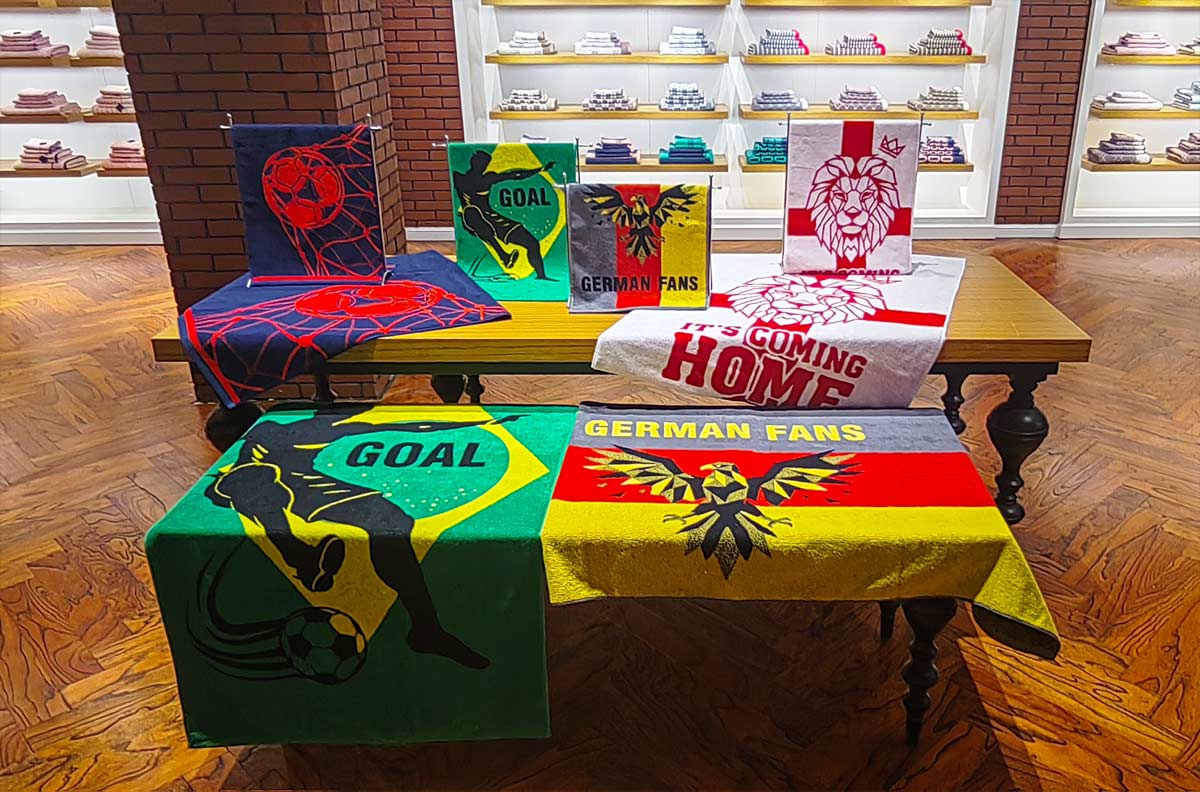
Team sports create another set of requirements. Practical performance still matters, but identification and branding may become equally important. A custom football towel can incorporate team colors, logos and graphics so that the product serves both functional and visual purposes.
Outdoor events may combine several requirements at once, including portability, moisture management, warm-weather comfort and branded presentation. This is why application-led specification is generally more useful than choosing a towel based on material alone.
Cotton vs Microfiber Sports Towels
Cotton and microfiber are two common choices, but they serve somewhat different priorities.
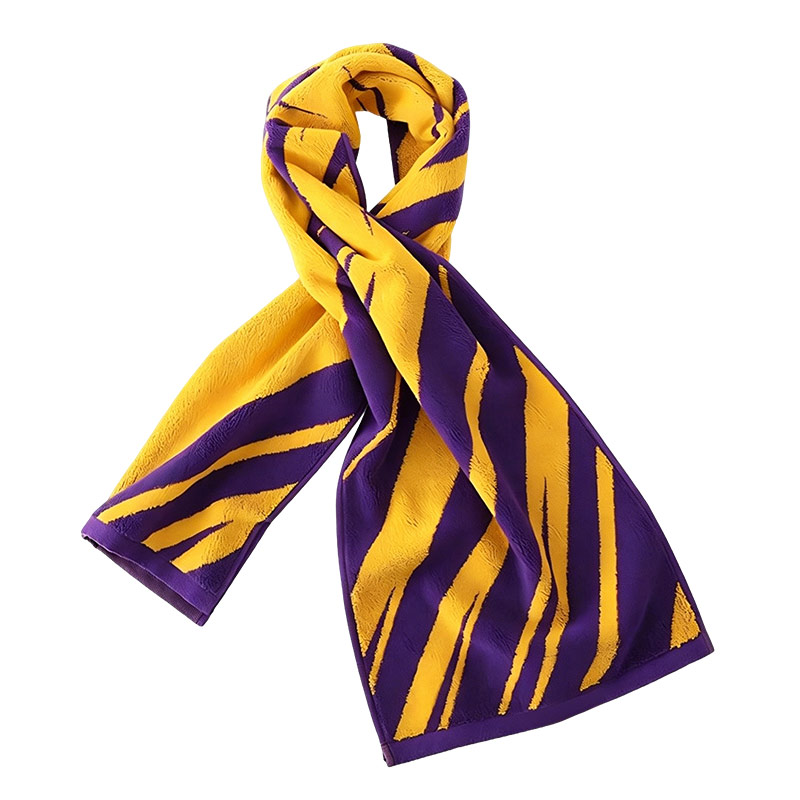
Cotton provides a traditional towel feel and is well suited to applications where softness, comfortable skin contact and familiar absorbency are important. It can fit gym, yoga, team, hospitality and promotional programs where users expect the tactile characteristics of conventional toweling.
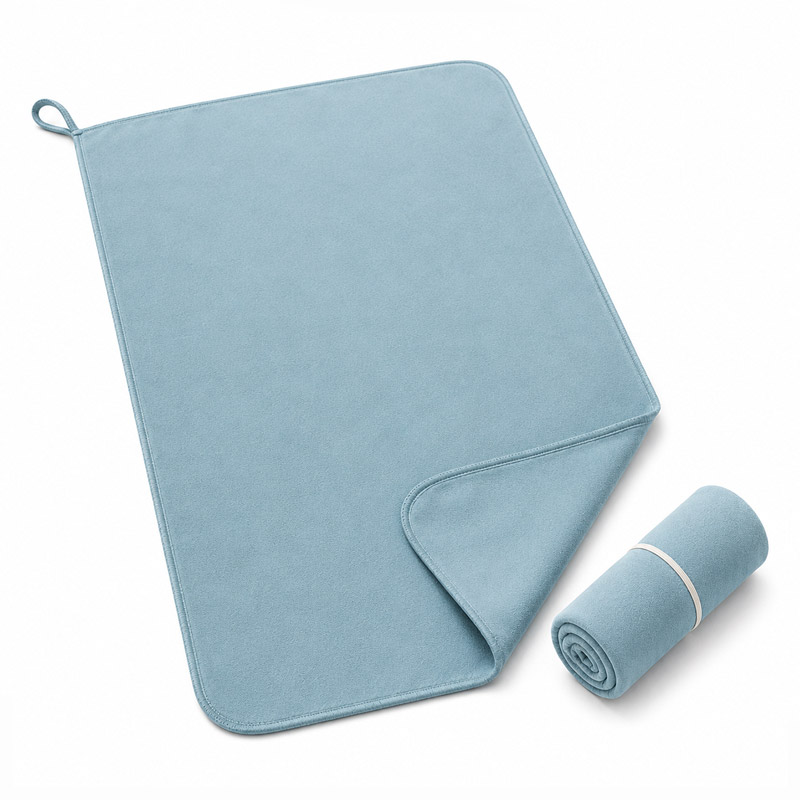
Microfiber is more closely associated with lightweight construction, compact handling and faster drying. It can therefore be useful for running, outdoor fitness, travel and other situations where the towel may need to be packed or carried frequently.
The choice should not be reduced to a question of which fabric is universally “better.” A more useful question is which material better matches the final product concept.
A fitness brand developing a soft studio towel may favor cotton. A running accessory collection may prioritize lightweight microfiber. A hot-weather sports program may consider a cooling towel instead of either conventional option.
What Makes a Good Sports Towel?
A good sports towel is one whose specification matches its intended use.
Absorbency is important, but it is only one part of performance. A highly absorbent towel that is inconvenient to carry may be poorly suited to running. A very lightweight towel may be practical for travel but may not create the hand feel required for another market.
Drying behavior also matters, particularly for users who need to pack the towel shortly after training. Surface feel should be considered where the product has frequent skin contact, while construction and stitching become especially relevant for products expected to undergo regular washing and reuse.
For branded sports towels, decoration quality is another part of the product. Logo placement, printing method, embroidery size and color coordination should work with the fabric rather than interfere with its practical purpose.
This is why professional product development normally begins with the application rather than simply copying an existing towel specification.
Custom Sports Towel Branding Options
Custom sports towels can support different branding methods depending on the material, visual requirements and intended product positioning.
Embroidery creates a textured logo and can work particularly well where a more traditional textile appearance is desired. Printing allows artwork, text and graphics to be applied in different ways depending on the towel structure. Sublimation can be relevant to compatible synthetic constructions where detailed color graphics are required. Woven labels provide another method of carrying brand information without relying on a large surface decoration.
The most suitable process depends on the fabric and design. A branding method that works well on a substantial cotton towel may not be the preferred approach for a thin, lightweight sports towel.
Before production, buyers should therefore confirm logo dimensions, artwork format, placement, color expectations and the relationship between decoration and the functional surface of the towel.
Developing a Custom Sports Towel for a Brand
For a private-label or OEM project, the product specification should ideally begin with the target user.
A gym chain may require towels intended for frequent handling and coordinated branding. A sports retailer may prioritize packaging and visual differentiation. A marathon or event organizer may focus on portability, printed logos and distribution efficiency. A team program may prioritize colors and recognizable graphics.
After the application is established, material and dimensions can be selected. Fabric weight, logo method, colors, labels and packaging can then be developed around the chosen product concept.
Hello World’s custom towel solutions currently cover material selection, product specifications, sampling, dimensions, weight, colors, printing, embroidery, labels, private-label elements, packaging and bulk production. For a B2B project, defining these elements clearly before bulk manufacturing helps keep the product aligned with the approved concept.
Common Mistakes When Selecting Sports Towels
One common mistake is choosing a towel solely by GSM. Fabric weight provides useful information, but material and construction are equally important. The heaviest option is not automatically the most suitable choice for sport.
Another mistake is selecting dimensions without considering the actual activity. A towel that looks impressive when unfolded can still be inconvenient if the target user needs to carry it during training.
Branding can also be overdesigned. Large embroidery, dense decoration or poorly positioned graphics may change how part of the towel feels or functions. The design should therefore account for the usable towel surface.
Finally, businesses sometimes move too quickly from an idea to bulk production. Sampling provides an opportunity to assess material, dimensions, color, logo placement, construction and overall appearance before a larger order is produced.
How Sports Towels Fit Different B2B Markets
Sports towels can serve several commercial markets beyond conventional sporting-goods retail.
Fitness centers can use branded towels as part of member programs, merchandise or promotional activities. Sports teams can incorporate colors and logos into functional accessories. Retail brands can develop private-label collections with customized packaging, while event organizers can create towels for races, outdoor events and promotional campaigns.
The same base product should not necessarily be used for all these markets. A branded gym towel, an event giveaway and a retail performance towel may require different material, weight, design and packaging decisions.
This makes specification flexibility important for B2B sourcing. Buyers should approach a sports towel as a product that can be adapted to its sales channel and customer profile rather than as a generic commodity.
Sports Towel Selection Checklist
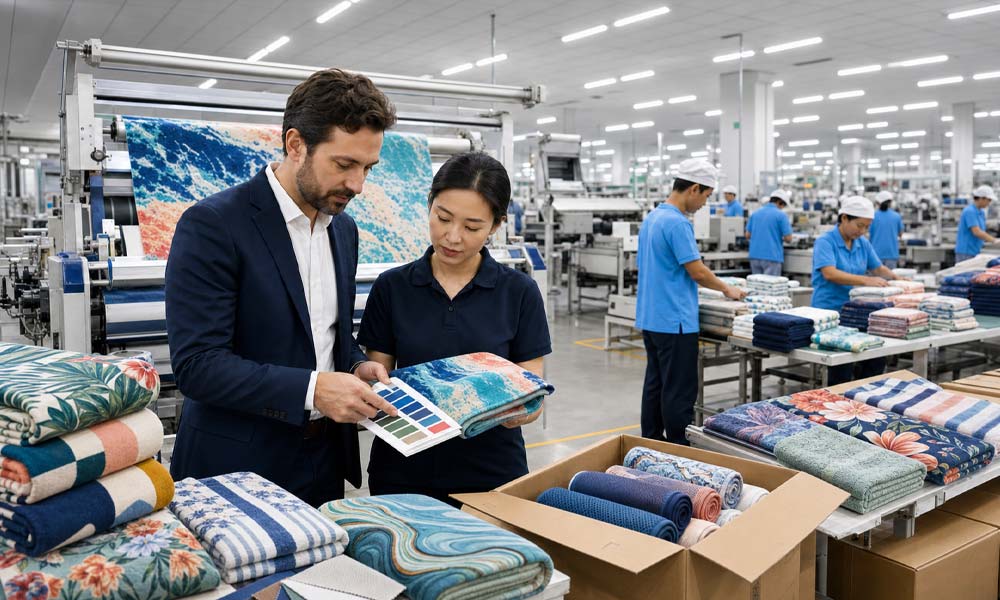
Before confirming a sports towel project, buyers should be able to answer a few practical questions. What activity is the towel designed for? Does the market favor cotton, microfiber or a cooling fabric? How important are compact storage and drying speed? What dimensions make sense for the user? What fabric weight creates the intended product feel? Which branding method works with the selected material? Will the product require custom labels or retail packaging?
Answering these questions early makes it easier to compare samples and communicate requirements clearly with a manufacturer.
FAQ About Sports Towels
What material is best for a sports towel?
There is no single best material for every sports towel. Cotton is a practical option when softness and a familiar absorbent towel feel are important. Microfiber is useful when lightweight handling, compact storage and faster drying are priorities. Cooling fabrics are designed for sports and outdoor applications where a refreshing wet-activated effect is required.
What GSM is good for a sports towel?
The appropriate GSM depends on the material and application rather than one universal number. Lower-weight constructions may support portability, while heavier constructions can create a fuller feel. Buyers should evaluate GSM together with fiber composition, towel size, fabric construction and intended use.
Is microfiber or cotton better for gym towels?
Both can work well. Cotton generally provides a softer and more traditional towel feel, while microfiber is usually more compact and quick drying. The better choice depends on whether comfort, absorbency, portability or drying speed has greater priority for the intended gym application.
What size should a sports towel be?
Sports towel dimensions should match the activity. Compact towels are convenient for carrying during training, while larger towels provide more drying area and may allow greater space for graphics or branding. Custom dimensions can be developed when standard sizes do not fit the intended use.
Can sports towels be customized with a logo?
Yes. Depending on the material and construction, sports towels can support methods such as embroidery, printing, sublimation and woven labels. The most suitable method depends on the fabric, artwork, logo size, required appearance and intended use of the finished towel.
Conclusion
Choosing the right sports towel requires balancing material, GSM, dimensions, absorbency, drying behavior, portability and branding instead of focusing on one specification in isolation.
Cotton can provide comfortable and familiar towel performance, microfiber can support lightweight and quick-drying applications, and cooling fabrics provide another option for hot-weather sports and outdoor use. The final choice should always reflect the activity, target customer and desired product positioning.
For brands, distributors, teams and retailers developing custom products, specification decisions should also include colors, logo methods, labels and packaging. Hello World provides OEM and ODM custom towel solutions covering product development from material selection and sampling through customized production and packaging.
If you are developing a sports towel collection for fitness, running, team sports, outdoor activities or retail, you can contact the Hello World team with your preferred material, dimensions and customization requirements.