Table of Contents
Introduction
Custom beach towels can serve very different purposes. A resort may need soft, absorbent towels designed for frequent use, while a travel brand may prefer lightweight microfiber towels that pack easily and dry quickly. Retail collections often place greater emphasis on colors, patterns, packaging, and brand presentation, while promotional projects may focus on logo visibility and convenient distribution.
Because these requirements vary, selecting custom beach towels should begin with the intended application rather than appearance alone. Material, towel dimensions, fabric weight, printing method, logo position, packaging, and expected washing conditions all influence how the finished product performs.
For buyers developing a new collection, Hello World’s custom beach towel collection includes cotton, microfiber, portable, and changing-towel options for resort, retail, travel, lifestyle, and promotional applications.
What Are Custom Beach Towels?
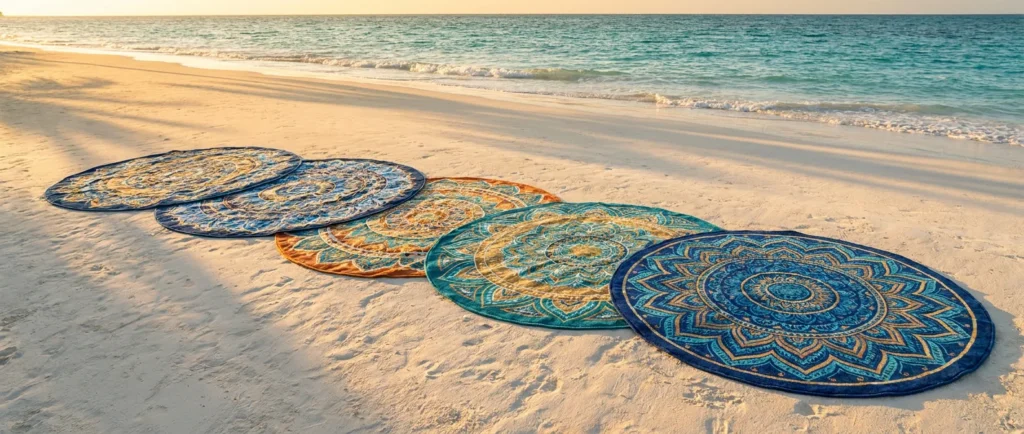
Custom beach towels are towels manufactured or decorated according to specific brand, application, or distribution requirements. Customization can involve much more than adding a logo.
Depending on the project, buyers may specify:
- Cotton or microfiber material
- Towel dimensions
- Fabric weight
- Pantone colors
- Printed graphics
- Embroidered logos
- Custom patterns
- Woven or care labels
- Individual packaging
- Private-label presentation
A beach towel is generally larger than a standard hand towel because it may be used not only for drying but also as a surface for sitting or lying beside pools and beaches. A broader overview of towel types and their functions is available in the Wikipedia guide to towels.
For B2B buyers, however, determining whether a towel is suitable requires looking beyond its basic definition. The product should match how customers will carry, use, wash, store, and display it.
Start With the Intended Beach Towel Application
The most efficient way to define specifications is to first identify who will use the towel and where.
A towel designed for a resort is unlikely to require exactly the same construction as one intended for a travel accessory collection.
| Application | Main Priorities | Common Direction |
|---|---|---|
| Resort | Comfort, absorbency, durability | Cotton |
| Hotel pool | Softness, repeated washing | Cotton |
| Travel brand | Lightweight, compact, quick drying | Microfiber |
| Beach retail | Appearance, patterns, branding | Cotton or microfiber |
| Outdoor use | Portability, drying speed | Microfiber |
| Promotional program | Branding area, portability | Project-specific |
| Lifestyle brand | Design, packaging, differentiation | Custom construction |
Defining the application early prevents buyers from selecting specifications simply because they are commonly used elsewhere.
For example, a thick cotton towel may communicate comfort in a resort environment but can become unnecessarily bulky for customers who need to fit the towel into compact travel luggage.
Cotton vs Microfiber Custom Beach Towels
Material is one of the most important decisions because it influences hand feel, absorbency, drying behavior, packed size, printing possibilities, and overall positioning.
Cotton Beach Towels
Cotton is widely associated with traditional towel softness and absorbency.
It works especially well for:
- Resorts
- Hotels
- Swimming pools
- Beach clubs
- Premium retail collections
- Lifestyle brands
Cotton can provide a fuller and more familiar towel feel, making it suitable when comfort is central to the product concept.
It is also useful for projects involving embroidery or designs where buyers want a recognizable textile texture.
However, cotton towels can generally be heavier and take longer to dry than lightweight microfiber alternatives. This should be considered when the product is primarily designed for travel.
Microfiber Beach Towels
Microfiber provides a different balance of performance.
It is particularly relevant when buyers prioritize:
- Quick drying
- Compact packing
- Lightweight construction
- Large printed graphics
- Travel convenience
- Outdoor use
Microfiber beach towels are often suitable for travel brands and outdoor collections because relatively large towel dimensions can still be combined with compact folded volume.
The best material therefore depends on the intended user rather than one material being universally superior.
How to Choose the Right Beach Towel Size
Beach towel size influences comfort, portability, branding area, packaging, and finished product weight.
Larger towels offer more coverage and visual space for patterns, while smaller formats may be easier to carry and package.
Before selecting dimensions, buyers should consider four questions.
Will the towel mainly be used for drying or lying on the beach?
A towel intended as a beach surface generally needs more coverage than one primarily carried for drying.
Will customers travel with the towel?
Compact dimensions or lightweight materials may be more practical for travel-focused products.
How important is the printed design?
Larger towel dimensions provide more visual space for full-surface artwork and promotional graphics.
How will the towel be packaged?
Finished dimensions and fabric weight affect folded size, retail presentation, carton capacity, and storage requirements.
The ideal dimensions should therefore reflect both end-user comfort and supply-chain practicality.
Does GSM Matter for Beach Towels?
GSM means grams per square meter and is commonly used to describe textile weight.
It is useful when comparing towel constructions, but buyers should avoid treating GSM as a simple quality score.
A higher GSM normally means more material per square meter, but performance also depends on:
- Fiber composition
- Yarn structure
- Weave
- Surface construction
- Finishing process
- Towel dimensions
A heavy towel is therefore not automatically the correct choice.
For resort or premium cotton applications, a fuller construction may support the desired user experience. For travel and outdoor products, excessive weight can reduce portability and increase drying time.
A better purchasing question is:
What fabric weight provides the right balance for this specific application?
That question leads to a more useful specification than simply requesting the highest possible GSM.
Match Weight to the Product Positioning
Different product concepts require different balances between softness, weight, portability, and drying performance.
| Requirement | Lighter Construction | Heavier Construction |
|---|---|---|
| Easy to carry | Strong advantage | Lower |
| Compact packing | Strong advantage | Lower |
| Quick drying | Generally better | Generally slower |
| Fuller hand feel | Lower | Strong advantage |
| Resort positioning | Possible | Often preferred |
| Travel positioning | Often preferred | Less practical |
| Large retail graphics | Depends on material | Depends on material |
Buyers should evaluate samples rather than selecting weight purely from specification sheets. Two towels with similar numerical specifications can still feel different because their yarn, weaving, surface, and finishing are different.
Choose the Right Printing Method
For many custom beach towels, design is one of the strongest differentiating features.
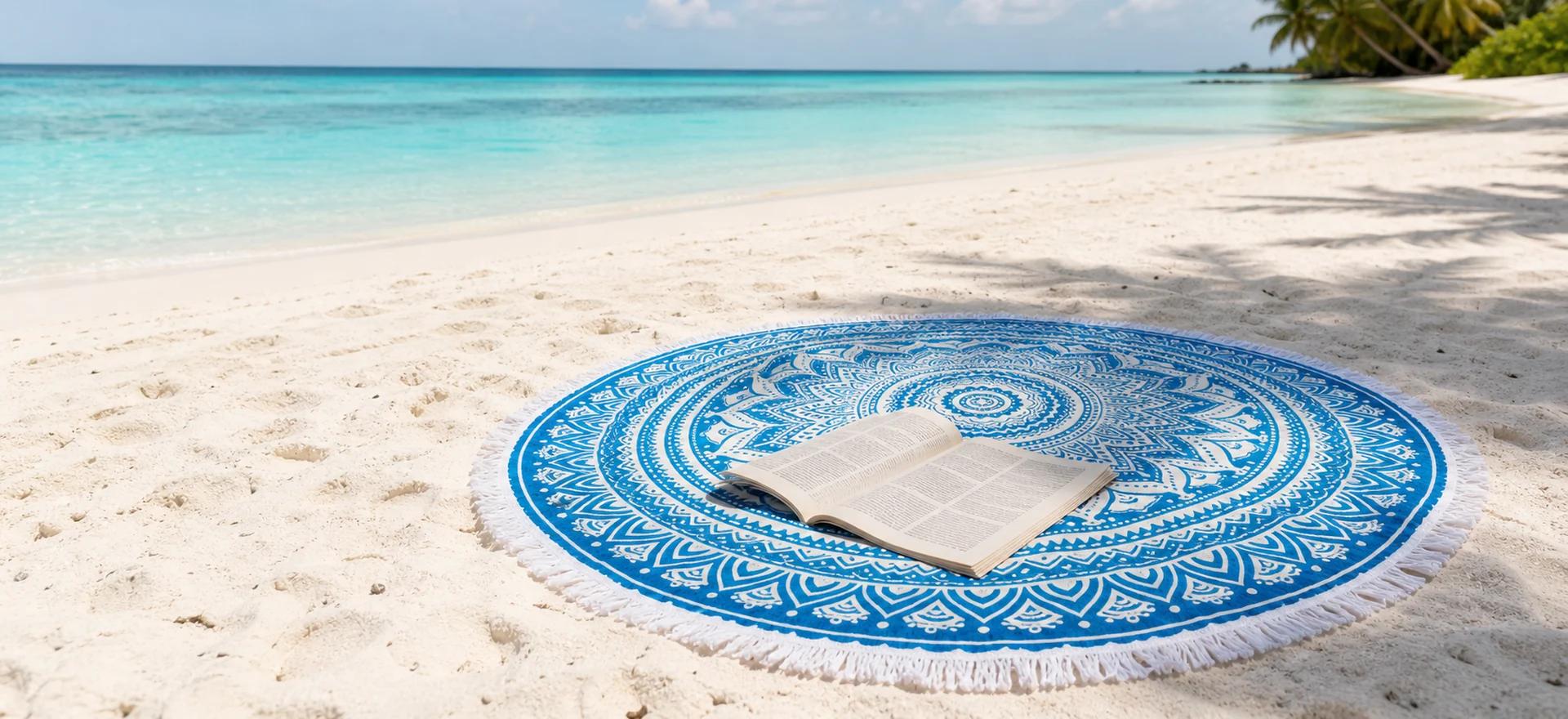
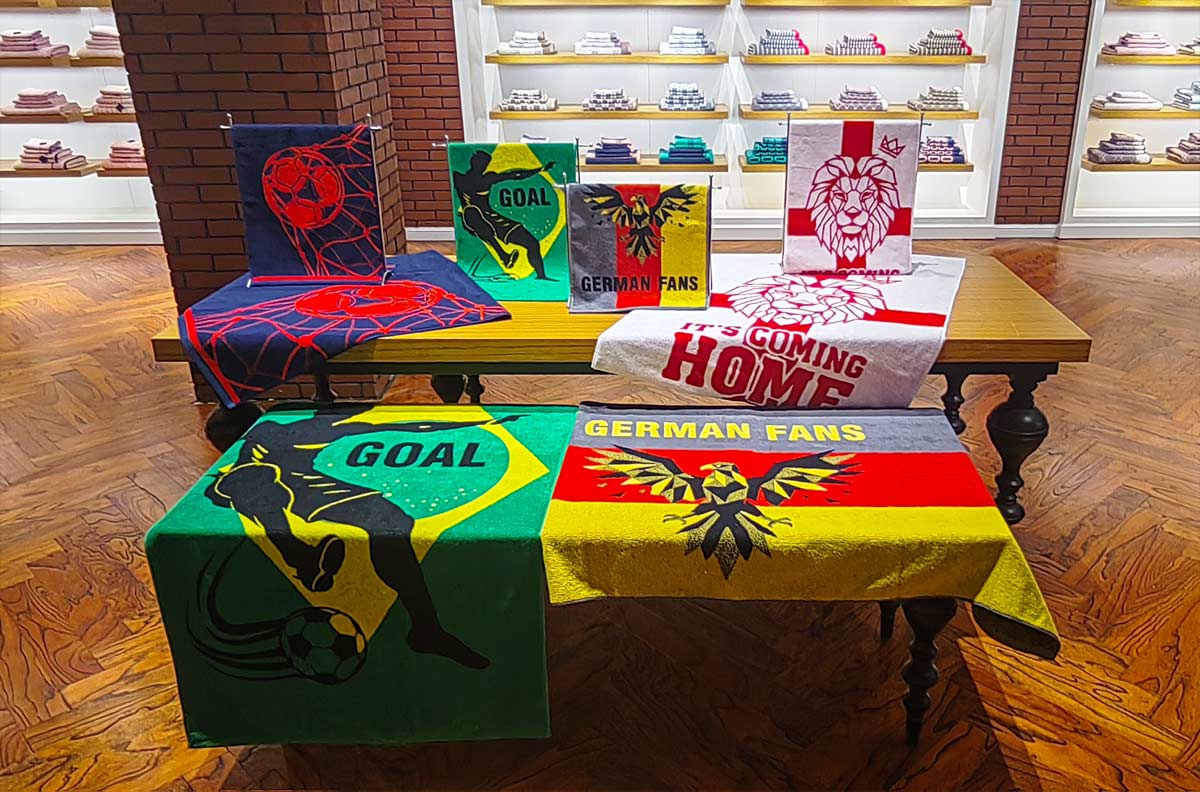
Beach towels provide a relatively large surface area, which makes them suitable for:
- Brand graphics
- Seasonal patterns
- Destination artwork
- Resort branding
- Sports graphics
- Promotional campaigns
- Lifestyle collections
However, printing methods should be matched to the material.
Sublimation Printing
Sublimation is particularly useful for suitable polyester-based microfiber constructions.
It can support:
- Detailed artwork
- Multiple colors
- Large print areas
- Photographic-style designs
- Gradient effects
This makes it attractive for retail and promotional products where the full towel surface is part of the design.
Other Printing Methods
Other printing processes may be suitable depending on fiber composition, desired appearance, color requirements, design complexity, and production configuration.
Buyers should therefore provide original artwork before confirming the manufacturing process.
A manufacturer can then evaluate whether the proposed design matches the selected fabric.
Printing or Embroidery: Which Is Better?
Neither method is universally better.
They create different visual effects.
Printing Is Better When:
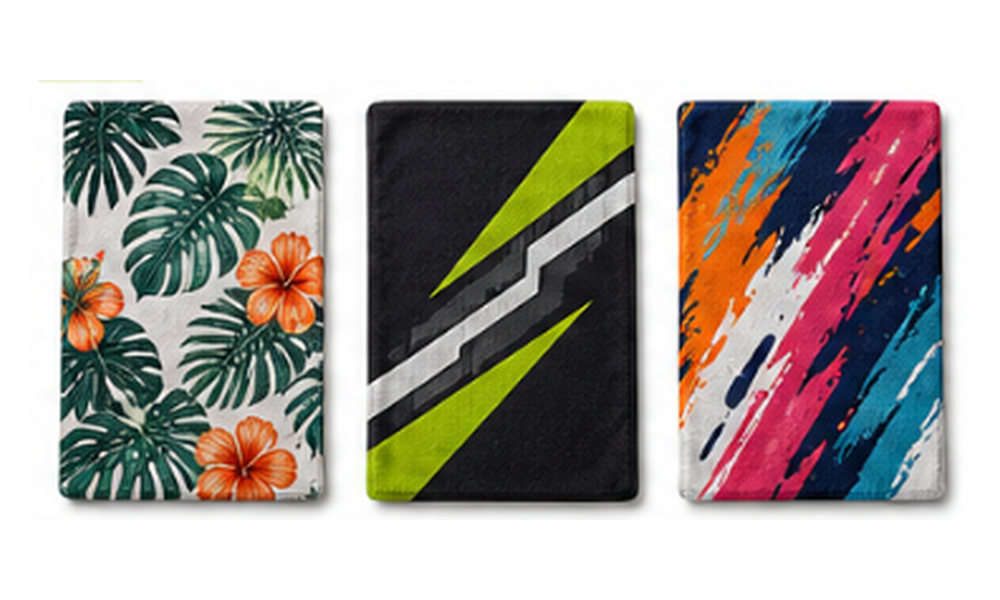
The design includes:
- Large graphics
- Multiple colors
- Repeating patterns
- Full-surface artwork
- Detailed illustrations
Printing allows the towel itself to become part of the visual identity.
Embroidery Is Better When:
The project requires:
- Smaller logos
- Resort names
- Club branding
- Simple symbols
- Premium textile appearance
Embroidery adds physical texture but can also create a thicker area on the towel.
Large embroidered areas may affect softness and folding, so embroidery usually works best when the logo size is controlled.
Some brands combine a printed towel design with a woven label or another subtle branding element instead of placing a large embroidered logo across the surface.
Color Selection Is More Important Than It Looks
Color affects branding, production consistency, photography, merchandising, and customer expectations.
For custom projects, buyers should provide a recognized color reference such as a Pantone value rather than relying entirely on colors shown on phone or computer screens.
Digital displays can vary considerably.
During development, important color considerations include:
- Main towel color
- Printed artwork
- Logo color
- Edge color
- Label color
- Packaging color
Brand colors can also behave differently on different materials. A color printed on microfiber may not visually match embroidery thread or dyed cotton perfectly.
This is why physical sampling and color approval remain important for branded textile products.
Think About the Entire Brand Presentation
A custom beach towel is often sold or distributed as a complete branded product rather than an isolated textile item.
That means packaging deserves attention during product development.
Possible options can include:
- Drawstring bags
- Paper sleeves
- Individual bags
- Retail boxes
- Printed inserts
- Hangtags
- Woven labels
- Care labels
- Barcode labels
A travel brand may favor compact packaging that reinforces portability, while a premium retail collection may place greater emphasis on shelf presentation.
A resort purchasing towels for internal guest use may require much simpler packaging.
The right packaging solution should therefore reflect the distribution channel rather than automatically using elaborate retail packaging for every project.
Private Label Details Should Be Planned Early
Private-label buyers should define branding requirements before final sampling.
Important details may include:
Brand label
Determine whether the towel requires a woven label, printed label, embroidered mark, or other identification.
Care label
Confirm required fiber and care information based on the destination market.
Packaging
Decide whether products need retail-ready presentation or simplified bulk packing.
Barcode or SKU
Retail buyers may need product-specific identification integrated into labels or packaging.
Design files
High-quality vector artwork helps prevent unnecessary design interpretation during sampling.
Planning these components together produces a more complete sample and reduces changes later in development.
Evaluate the Sample as a Finished Product
Sample approval should involve more than asking whether the towel “looks good.”
Buyers should evaluate the sample from the same perspective as their future customers.
| Inspection Area | What to Check |
|---|---|
| Material | Texture and hand feel |
| Dimensions | Finished size |
| Weight | Suitability for intended use |
| Color | Match to approved reference |
| Printing | Detail and consistency |
| Logo | Size, placement and appearance |
| Edges | Stitching and finishing |
| Absorbency | Practical drying performance |
| Drying | Appropriate for application |
| Labels | Position and readability |
| Packaging | Fit and presentation |
If the product will be sold as part of a retail collection, the packaged sample should also be evaluated.
A good towel inside unsuitable packaging is still an incomplete product.
Consider Repeated Washing and Real-World Use
Beach towels encounter demanding conditions.
Depending on the market, they may face:
- Frequent washing
- Sun exposure
- Sand
- Pool environments
- Moisture
- Folding and transportation
- Repeated handling
A resort buyer may prioritize repeated laundering, while a retail travel brand may place greater importance on low packed volume and fast drying.
Testing should therefore reflect real use.
For example, evaluating only initial softness does not reveal whether stitching, color, print appearance, or dimensional stability will remain suitable after repeated washing.
When developing repeat programs, buyers should also keep approved specifications and samples as references for future production.
What Should Resorts Consider?
Resorts often have different priorities from retail brands.
Their towels may be washed repeatedly and used by many different guests.
Important considerations include:
- Comfortable hand feel
- Appropriate dimensions
- Absorbency
- Color stability
- Consistent finishing
- Embroidery or logo positioning
- Laundry environment
- Replacement consistency
Resort buyers should avoid selecting towels only according to initial appearance.
The practical lifecycle of the towel is usually more important than how it feels before the first wash.
What Should Travel Brands Consider?
Travel-focused beach towels require almost the opposite design philosophy.
Customers often need the towel to fit inside:
- Backpacks
- Suitcases
- Beach bags
- Carry-on luggage
- Camping equipment
For these customers, microfiber can be particularly attractive because it supports lightweight and compact product development.
Travel brands may also consider:
- Carry bags
- Hanging loops
- Compact folding
- Full-surface graphics
- Lightweight packaging
- Coordinated color collections
The towel should feel like a travel accessory rather than simply a smaller version of a resort towel.
What Should Retail Brands Consider?
Retail brands need to evaluate both performance and presentation.
The product must work physically, but it must also communicate clearly on a shelf or online product page.
Important retail considerations include:
- Distinctive patterns
- Consistent collection colors
- Attractive folded appearance
- Private labels
- Packaging
- Clear product positioning
- Repeatable specifications
Retail collections may also benefit from developing several designs using a consistent material and size platform.
This can create visual variety while simplifying manufacturing consistency across the range.
How to Work With a Custom Beach Towel Manufacturer
Product development becomes easier when the buyer provides a structured brief.
A useful starting specification includes:
- Target application
- Material preference
- Required dimensions
- Desired towel weight
- Quantity
- Pantone colors
- Logo artwork
- Printing or embroidery requirements
- Labels
- Packaging
- Destination market
If some details are not yet confirmed, communicate the intended use.
An experienced manufacturer can often recommend alternatives based on whether the towel is intended for resorts, travel retail, promotional distribution, beach clubs, or branded merchandise.
Hello World’s OEM/ODM customization process covers material selection, sample development, logo and packaging confirmation, production, quality inspection, and preparation for international delivery.
This allows buyers to evaluate the full product specification before moving into larger-scale manufacturing.
Conclusion
Successful custom beach towels begin with a clear understanding of the customer and application.
Cotton may be appropriate when softness, absorbency, and a traditional premium towel experience are priorities. Microfiber can be more suitable when portability, quick drying, lightweight construction, and large printed graphics matter more.
Size, GSM, printing, embroidery, colors, labels, packaging, and washing requirements should then be developed around that core product positioning.
For resorts, retailers, travel brands, lifestyle companies, and promotional programs, the strongest product is rarely the towel with the most features. It is the towel whose specifications work together for the intended market.
By evaluating materials, dimensions, design, branding, packaging, and samples as one complete system, buyers can develop a beach towel collection that is easier to position, use, reproduce, and manage.
Frequently Asked Questions
What is the best material for custom beach towels?
Cotton and microfiber serve different needs. Cotton is suitable for buyers prioritizing softness, absorbency, and a traditional towel feel, while microfiber is especially useful for lightweight, compact, and quick-drying applications.
Are microfiber beach towels suitable for travel?
Yes. Their relatively lightweight and compact construction makes microfiber towels particularly suitable for travel, outdoor, and portable beach products.
Can custom beach towels have full-surface designs?
Yes. Suitable printing methods can support large graphics and full-surface artwork. The appropriate process depends on fabric composition, design complexity, colors, and desired appearance.
Can beach towels be customized in different sizes?
Yes. Custom dimensions can be developed according to applications such as resorts, retail collections, travel, promotions, or beach clubs.
Is a higher GSM always better for beach towels?
No. Higher fabric weight can provide a fuller hand feel, but it can also increase overall towel weight and drying time. The appropriate GSM should match the material and intended application.
Should I approve a sample before production?
Yes. Sample approval allows buyers to evaluate material, size, weight, colors, printing, logo placement, stitching, labels, and packaging before confirming production specifications.
What information should I prepare for a custom beach towel project?
A useful project brief includes material, dimensions, towel weight, quantity, colors, artwork, branding method, labels, packaging requirements, intended application, and destination market.
Need Help Developing Custom Beach Towels?
Whether you are developing towels for a resort, travel collection, retail brand, beach club, or promotional program, the specification should be built around how the product will actually be used.
Explore the custom beach towel collection to compare cotton, microfiber, portable, and changing-towel formats, then define the material, size, design, branding, and packaging requirements for your project.