
Table of Contents
Introduction
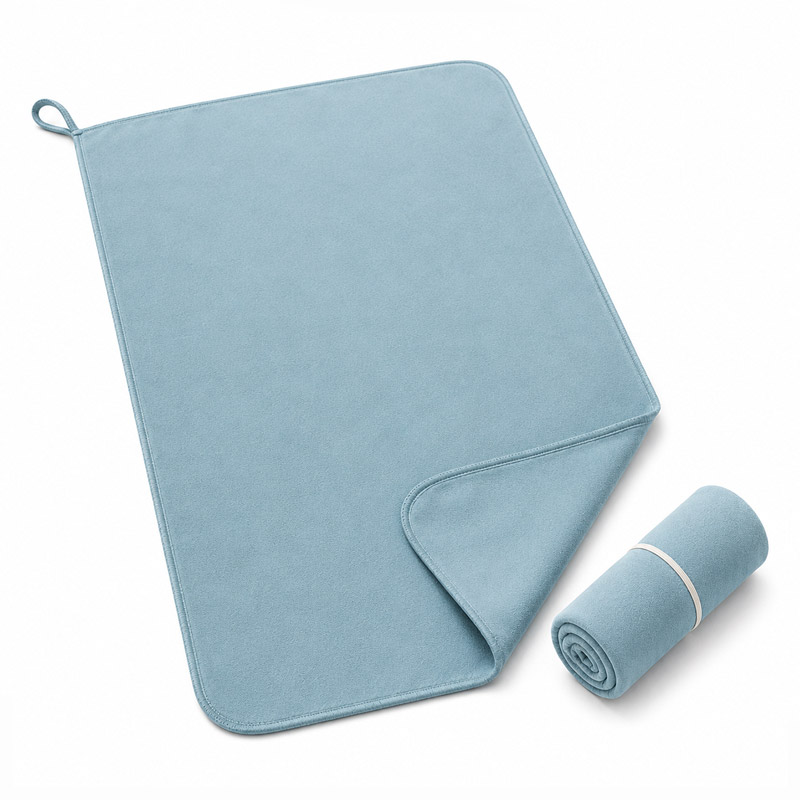
A microfiber sports towel is designed for a different set of priorities than a traditional bath towel. For running, gym training, cycling, yoga, hiking, travel, and outdoor activities, users often care as much about drying speed, packed size, and portability as they do about moisture absorption.
That difference matters for brands and distributors developing a sports towel collection. Selecting a microfiber towel simply because it feels soft is not enough. Fiber composition, fabric structure, towel dimensions, weight, edge finishing, branding method, and intended activity should all be considered together.
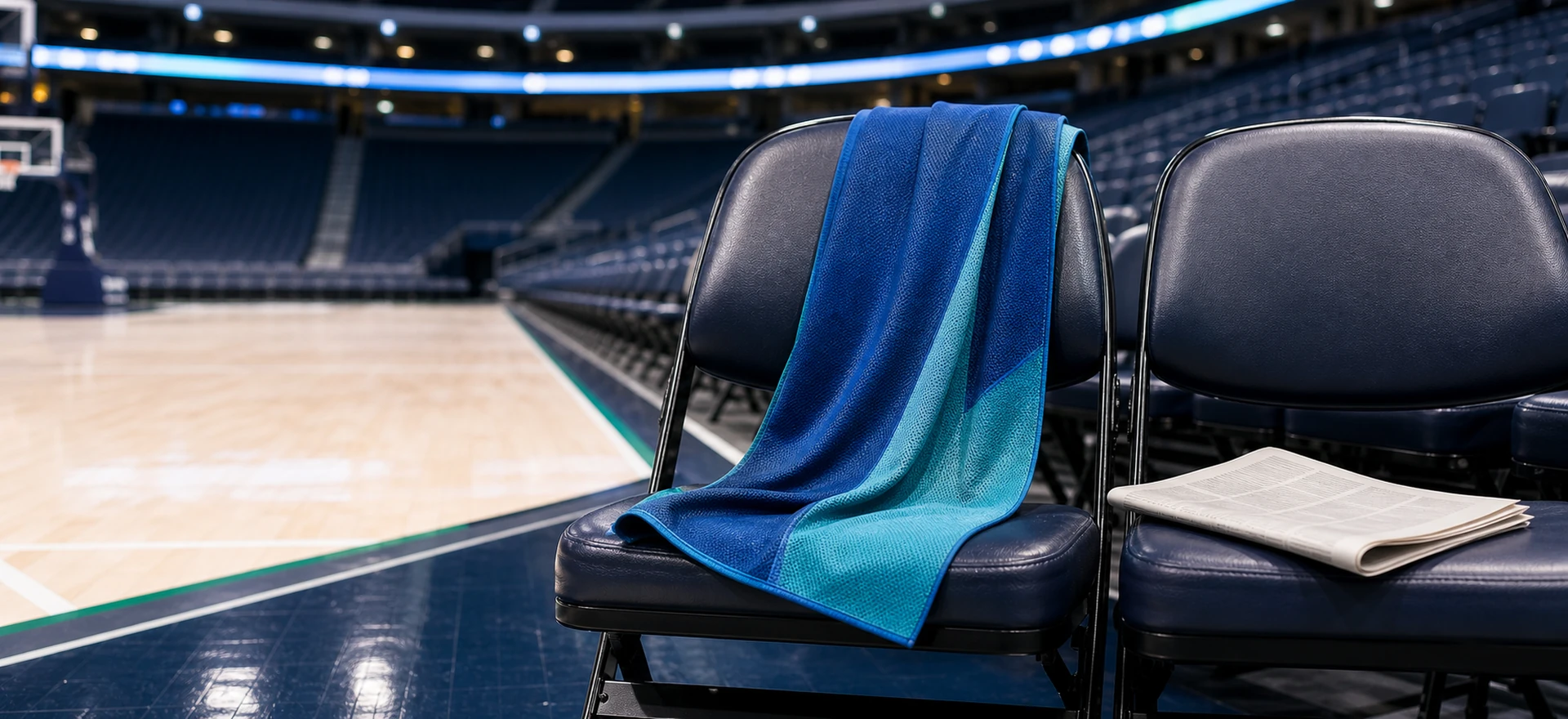
Microfiber is especially useful when a sports towel needs to remain lightweight and compact while handling sweat and moisture efficiently. Hello World’s sports towel collection includes microfiber, cotton, cooling, and team-oriented options for different sports and fitness applications.
This guide explains how buyers can evaluate microfiber sports towels more systematically before developing a customized product.
What Is a Microfiber Sports Towel?
A microfiber sports towel is a lightweight textile made from extremely fine synthetic fibers, commonly using polyester, polyamide, or blends designed to create a fine fabric structure.
The general microfiber overview on Wikipedia explains that microfiber is composed of fibers finer than one denier and is commonly manufactured from polyester and polyamide. Different fiber combinations and constructions can be engineered for applications requiring softness, cleaning performance, moisture management, or compactness.
In sports towel applications, these properties make microfiber particularly useful when buyers need a product that can be carried easily during physical activity.
Typical uses include:
- Gym workouts
- Running
- Cycling
- Yoga
- Hiking
- Camping
- Travel
- Outdoor training
- Sports events
- Fitness promotions
Unlike a large cotton bath towel, a microfiber sports towel is often designed around mobility.
That means the buyer should ask not only, “How much moisture can this towel absorb?” but also:
How quickly does it dry?
How much space does it occupy when folded?
How comfortable is it against the skin?
Can users carry it conveniently during exercise?
Can the material support the required logo or design?
These questions provide a more realistic way to evaluate the product.
Why Microfiber Works Well for Sports Applications
Microfiber has several characteristics that align naturally with active-use products.
One of the most important is its ability to combine relatively low weight with useful moisture-handling performance.
For a runner, cyclist, or traveler, a towel does not need to feel like a hotel bath towel. It needs to perform without becoming an unnecessary burden.
This gives microfiber several practical advantages.
Faster Drying
Sports towels are frequently used in situations where they cannot remain spread out for long periods.
Users may finish a workout, wipe away sweat, place the towel into a gym bag, and continue with the rest of their day.
A towel that retains moisture for too long can become inconvenient in this environment.
Microfiber constructions can provide faster drying than many heavier traditional towel formats, although actual drying performance still depends on fabric structure, weight, dimensions, environmental conditions, and how wet the towel becomes.
Compact Storage
A large surface area does not necessarily need to mean a bulky packed product.
Microfiber can be manufactured into relatively thin and flexible constructions, allowing sports towels to fold into compact formats.
This characteristic is particularly valuable for:
- Running packs
- Gym bags
- Backpacks
- Carry-on luggage
- Cycling equipment
- Outdoor gear
For brands developing portable fitness accessories, folded dimensions should be evaluated alongside open towel dimensions.
Lightweight Handling
A towel used during exercise should not become distracting.
This is especially important for running and outdoor applications where every item carried by the user adds to overall load.
Lower-weight microfiber constructions can provide enough surface area for sweat management without creating the bulk associated with much larger cotton towels.
Microfiber vs Cotton Sports Towels
Microfiber and cotton should not be treated as competing materials where one is always better.
They serve different product positions.
| Factor | Microfiber Sports Towel | Cotton Sports Towel |
|---|---|---|
| Packed size | Usually compact | Usually larger |
| Drying speed | Generally faster | Generally slower |
| Weight | Can be very lightweight | Often heavier |
| Traditional towel feel | Different from cotton | Strong |
| Soft natural feel | Depends on construction | Strong |
| Travel suitability | Excellent | Moderate |
| Running suitability | Excellent | Good |
| Gym use | Excellent | Excellent |
| Outdoor portability | Excellent | Moderate to good |
| Embroidery suitability | Depends on structure | Often very suitable |
A fitness club offering towels inside a locker room may prefer cotton because users expect a fuller traditional hand feel.
A running accessories brand may make the opposite decision because compactness and drying speed matter more.
Neither specification is automatically superior.
The correct material depends on what the customer is expected to do with the towel.
Match the Towel to the Sport
“Sports towel” is a broad product category.
A runner and a yoga user do not necessarily need the same product.
Gym and Fitness
Gym users need convenient sweat management during repeated exercises.
A microfiber gym towel should generally balance:
- Absorbency
- Quick drying
- Softness
- Appropriate surface area
- Compact storage
- Repeated handling
The towel should be large enough to be useful without becoming awkward around fitness equipment.
For this application, Hello World’s microfiber sweat towel is designed for gym, running, yoga, cycling, fitness, and outdoor activities, with quick-drying performance and customizable sizing and branding.
Running
Running places greater emphasis on low weight and portability.
A running towel may be carried:
- Around the neck
- In a waist pack
- In a backpack
- At an aid station
- In a race kit
For this reason, simply choosing the thickest available towel rarely makes sense.
A compact towel that manages sweat effectively and dries quickly is usually more practical.
Cycling
Cyclists face similar constraints.
Space is limited, and accessories often need to fit into small bags or pockets.
A compact microfiber towel may be useful during training, touring, indoor cycling, or rest stops.
Yoga
Yoga towels can involve different requirements depending on whether the product is intended primarily for wiping sweat or covering equipment.
A small fitness towel may work for sweat management, while mat-oriented products require dimensions specifically designed around the intended surface.
Buyers should therefore avoid using “yoga towel” as a specification by itself.
The exact usage scenario should be defined first.
Outdoor Sports
Hiking, camping, climbing, and outdoor fitness environments place greater value on portability and drying speed.
Users may not have access to a dryer or a large indoor drying area.
A lightweight microfiber construction can therefore provide practical advantages when products need to dry naturally between activities.
How Should Buyers Choose the Fabric Weight?
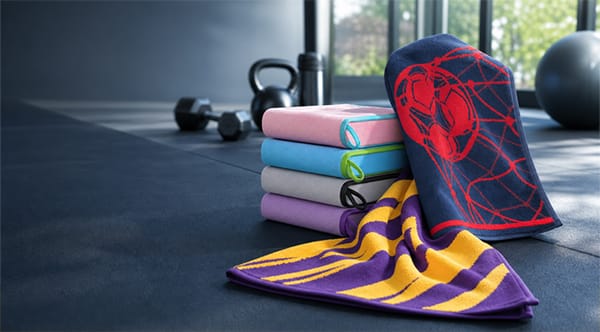
Fabric weight should be matched to the application rather than maximized.
A heavier microfiber towel can create a fuller hand feel and potentially provide greater moisture capacity, while a lighter towel can improve portability and reduce folded volume.
For sports buyers, the practical question is:
“What balance of performance and portability does the customer need?”
A useful decision framework is:
| Application | Weight Direction | Main Priority |
|---|---|---|
| Running | Lightweight | Minimum bulk |
| Cycling | Lightweight | Compact storage |
| Travel | Lightweight | Packability |
| General gym | Light to medium | Balanced performance |
| Fitness club | Medium | Comfort and durability |
| Outdoor sports | Lightweight | Faster drying |
| Promotional sports event | Project-specific | Branding and distribution |
The appropriate number cannot be determined from application alone because fiber composition and fabric construction also influence performance.
For that reason, buyers should compare physical samples instead of selecting a sports towel entirely from a GSM specification.
Size Is Just as Important as Material
A microfiber towel can be lightweight, but an unsuitable size can still make it inconvenient.
The correct dimensions depend largely on how the towel will be used.
A small towel is suitable for wiping:
- Face
- Hands
- Neck
- Fitness equipment
- Sweat during exercise
A larger sports towel provides more surface area but occupies more space.
Buyers should therefore evaluate:
Open Size
Is the towel large enough for the intended activity?
Folded Size
Will it fit comfortably into the customer’s bag or packaging?
Branding Area
Is there enough space for the required logo without overwhelming the towel?
User Handling
Can the towel be carried, folded, and repositioned conveniently during exercise?
These practical considerations are often more important than simply selecting a standard market size.
Absorbency and Drying Speed Need to Be Balanced
Sports towel performance is sometimes simplified into a single question:
“How absorbent is it?”
That question is useful but incomplete.
A sports towel also needs to release moisture during drying.
A towel that can hold substantial moisture but takes a long time to dry may be appropriate in one environment and inconvenient in another.
For example:
A fitness facility can collect towels and manage them through an organized laundry system.
A traveler may need the same towel to dry naturally before being placed back into luggage.
A runner may use a towel several times throughout an event.
These use cases require different priorities.
A good microfiber sports towel specification therefore considers the full moisture cycle:
Absorb → Hold → Release → Dry → Reuse
This provides a more realistic evaluation than focusing only on initial absorption.
Evaluate Surface Texture and Skin Contact
A sports towel comes into frequent contact with the face, neck, arms, and hands.
Surface feel therefore matters.
However, “soft” is subjective.
Different microfiber constructions can feel:
- Smooth
- Suede-like
- Brushed
- Plush
- Textured
- Dense
- Lightweight and flat
The correct texture depends partly on brand positioning.
A compact travel towel may intentionally use a thin smooth construction.
A premium fitness accessory may use a softer and fuller surface.
Buyers should evaluate physical samples rather than relying only on material names because two products both described as “microfiber” can feel noticeably different.
Check Edge Finishing and Construction
The center of the fabric usually receives the most attention, but the edges also influence durability and product appearance.
During sampling, examine:
- Edge stitching
- Seam consistency
- Loose threads
- Corner finishing
- Logo placement near edges
- Shape consistency
- Dimensional accuracy
These areas become especially important when the towel will experience frequent washing or repeated gym use.
A visually attractive fabric is not enough if edge construction does not match the expected product lifecycle.
Choose Branding That Matches the Fabric
Microfiber sports towels can support different branding approaches depending on their construction.
Common options include:
- Printing
- Sublimation
- Embroidery
- Woven labels
- Printed labels
- Custom packaging
The best option depends on both the artwork and the fabric.
Large Graphic Designs
If the towel forms part of a visually driven fitness collection, printing may allow the design to occupy a larger area.
This is useful for:
- Fitness brands
- Sports events
- Retail collections
- Promotional campaigns
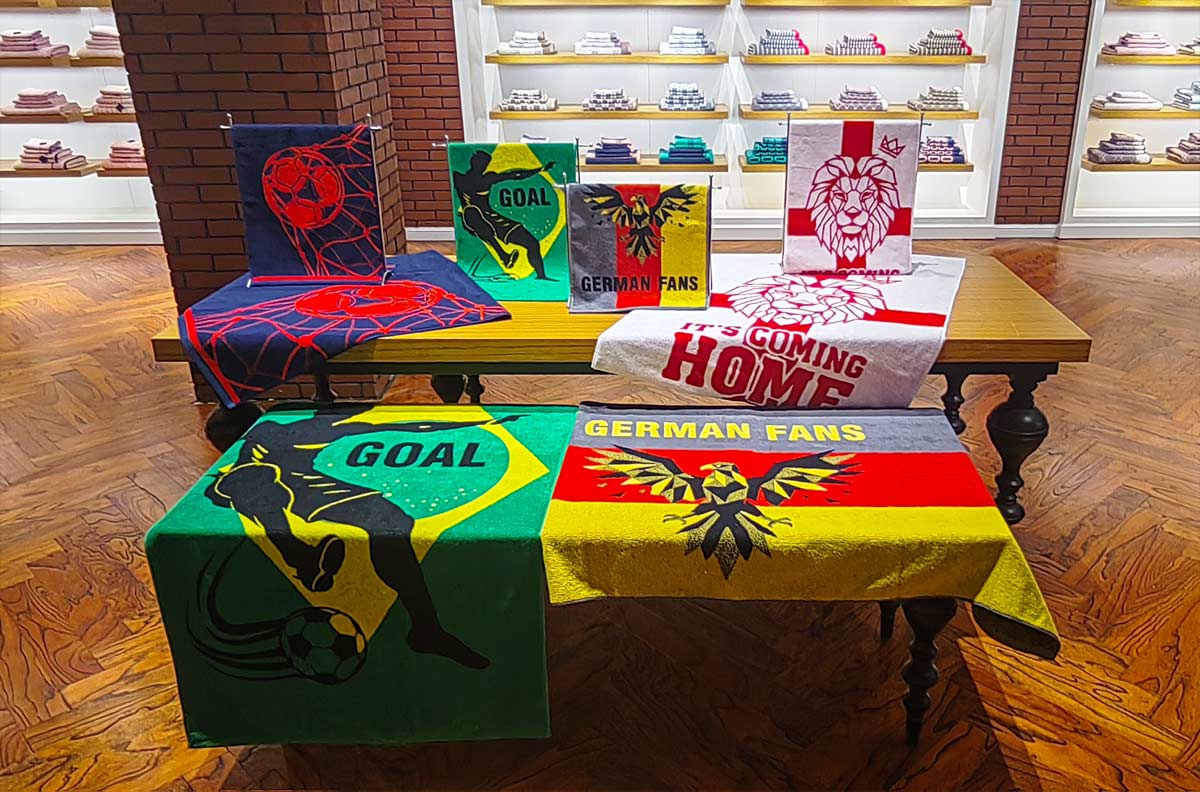
- Team graphics
Simple Logos
A smaller logo may provide stronger brand recognition without dominating the towel.
Depending on fabric construction, this can be achieved through embroidery, printing, or a branded label.
Private Label Products
For retail projects, branding should be considered as a complete system.
The towel, label, packaging, logo position, color palette, and product presentation should feel consistent.
The result should look like a finished branded product rather than a generic towel with a logo added at the end.
Think About Packaging During Product Development
Compactness is one of microfiber’s strongest advantages, so packaging should preserve rather than undermine that benefit.
Possible packaging formats can include:
- Drawstring bags
- Compact pouches
- Paper sleeves
- Individual bags
- Retail boxes
- Hangtags
- Printed inserts
For travel and outdoor collections, packaging can become part of the product’s functionality.
A reusable pouch, for example, may help customers keep the towel organized inside a gym bag or backpack.
However, packaging should still match the distribution model.
Products intended for retail display may require different presentation from towels distributed at marathons, sports clubs, or promotional events.
What Should You Inspect During Sampling?
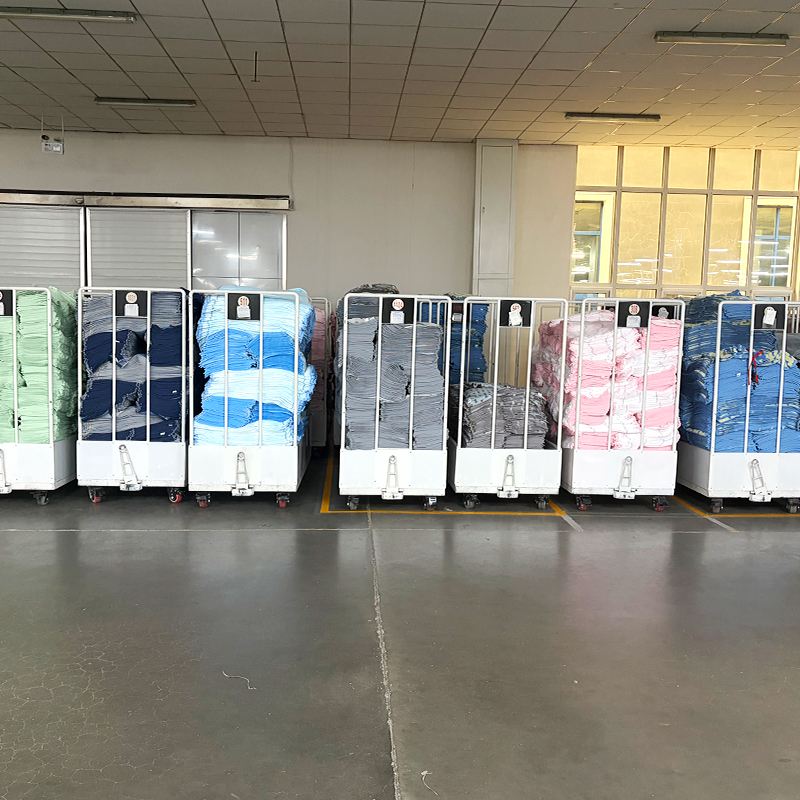
A microfiber sports towel sample should be evaluated as a working product, not only as a visual reference.
Use the towel in conditions similar to its intended application.
| Check | What to Evaluate |
|---|---|
| Material | Texture and skin comfort |
| Weight | Portability and hand feel |
| Size | Suitability for activity |
| Folded volume | Bag and packaging fit |
| Absorption | Sweat and moisture handling |
| Drying | Time needed under normal conditions |
| Stitching | Edge and corner workmanship |
| Logo | Position and clarity |
| Color | Match with approved reference |
| Labels | Content and placement |
| Packaging | Function and presentation |
After washing, examine the sample again.
Look for changes in:
- Dimensions
- Surface feel
- Color
- Stitching
- Print appearance
- Logo appearance
- Shape
One unused sample cannot reveal everything about how a product will perform during repeated use.
Avoid Choosing Microfiber Only Because It Is Lightweight
Light weight is valuable, but a towel still has to perform its basic function.
An extremely thin towel may be compact yet fail to provide the desired user experience.
Likewise, increasing fabric weight without considering the application can remove the portability advantage that made microfiber attractive in the first place.
The best product usually sits between these extremes.
That balance depends on:
Who uses it
A marathon participant has different needs from a health club member.
Where it is used
Outdoor products face different drying conditions from indoor gym products.
How it is carried
Travel and running products must fit into limited storage space.
How often it is washed
Commercial fitness environments may require repeated laundering.
How the brand is positioned
A premium retail accessory can require a different hand feel from a mass-distributed sports event towel.
What B2B Buyers Should Tell the Manufacturer
Providing a clear development brief can significantly improve the sampling process.
Useful information includes:
- Intended sport or application
- Preferred material
- Target towel dimensions
- Preferred weight or feel
- Quantity
- Pantone colors
- Logo artwork
- Branding method
- Label requirements
- Packaging requirements
- Destination market
If the specification is not fully defined, explain the application first.
For example:
“Lightweight running towel that needs to fit inside a small carry pouch.”
This is more useful than simply requesting:
“Microfiber towel.”
The first description provides information about performance and customer expectations, allowing the manufacturer to recommend a more appropriate starting specification.
Frequently Asked Questions
Are microfiber sports towels good for the gym?
Yes. Microfiber can work well for gym applications because it can combine moisture absorption, relatively fast drying, low weight, and compact storage. The correct size and fabric construction should still be selected according to whether the towel is intended for equipment use, sweat management, showering, or general fitness.
Do microfiber sports towels dry faster than cotton towels?
Many lightweight microfiber constructions dry faster than heavier traditional cotton towels because they contain less material and can be engineered for active-use applications. Actual drying speed still depends on towel weight, dimensions, fiber structure, moisture level, airflow, humidity, and environmental conditions.
What size microfiber sports towel is best?
There is no universal size. Smaller towels work well for sweat management, running, cycling, and compact fitness applications, while larger towels provide greater surface area for gym or general sports use. Buyers should evaluate both the open size and the folded size.
Can microfiber sports towels have custom logos?
Yes. Depending on fabric construction and artwork, microfiber sports towels can support printing, sublimation, embroidery, woven labels, or other branding methods. The branding process should be selected together with the material rather than after the towel specification has been finalized.
What should I check before approving a microfiber towel sample?
Check material feel, dimensions, weight, absorption, drying behavior, stitching, logo quality, color accuracy, labels, folded volume, and packaging. Washing the sample before final approval can also help evaluate dimensional stability and the durability of branding and finishing.
Conclusion
A microfiber sports towel should be selected around the activity rather than the material name alone.
Running and outdoor products generally place greater value on lightweight construction, compact storage, and quick drying. Gym and fitness applications may require a stronger balance between moisture management, comfort, size, and repeated washing. Retail and private-label projects add another layer of requirements involving branding, color consistency, labels, and packaging.
For B2B buyers, the most effective development process is therefore to define the user first, then determine material construction, weight, dimensions, surface feel, branding, and packaging around that use case.
Microfiber provides an excellent foundation for portable sports towels, but its real value comes from matching the construction to the customer rather than simply choosing the lightest available fabric.
Brands, distributors, fitness companies, and sports organizations developing new towel programs can compare microfiber, cotton, cooling, and team-oriented options through the Hello World sports towel collection and use physical sampling to confirm the final specification before production.